

Chapter 1: Clinical Overview
Stimulant Laxatives - oral
-
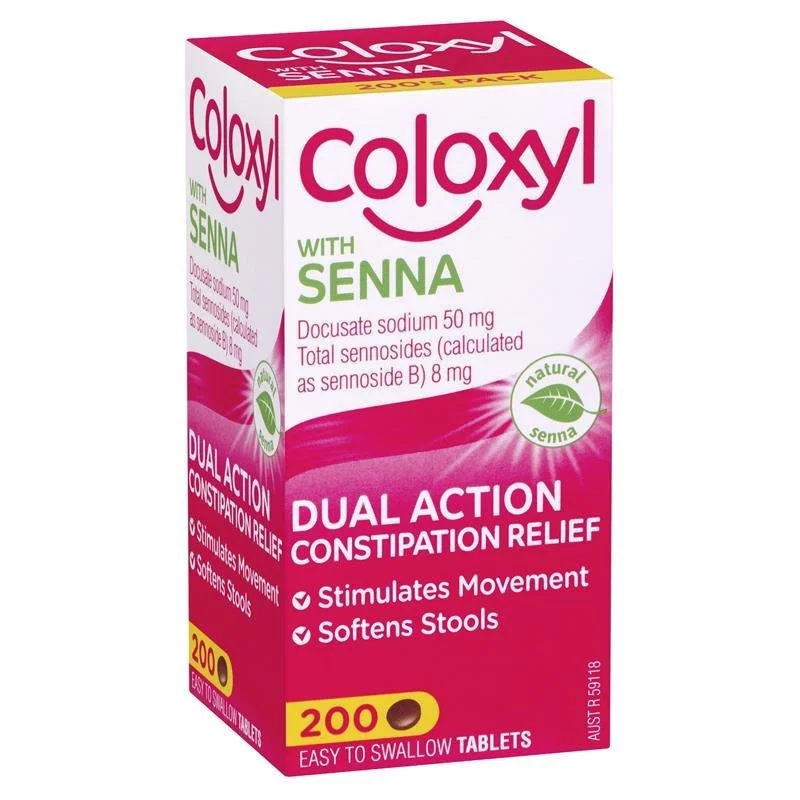
Coloxyl with Senna
Dulcolax
NOTE: It is not ideal for a patient to take stimulant laxatives regularly (everyday) for a long period. Overtime or with excessive use, the body may stop responding to the stimulant and the medicine becomes less effective and requires larger and larger doses to have effect.
-
Stimulant laxatives have a moderate rate of action and will usually work within 24 hours.
The dose will depend on the severity of symptoms, the age of the patient and the cause (if known) of the constipation.
See pack instructions for guidance.
TIP: Encourage your patient to increase their water intake to assist with softening the stool.
If you feel your patient may be overusing a stimulant laxative, refer them to your pharmacist.
-
Patients who are experiencing early signs of constipation, and have some low level discomfort with little or no pain.

Osmotic laxatives - oral
-
Movicol
Lactulose
NOTE: Osmotic laxatives can be used regularly (everyday) for long periods, under a doctor’s supervision.
Movicol should be used only under doctor’s supervision in patients on a low-salt or low-sodium diet.
Lactulose, especially in high doses, should not be used by people with diabetes (as it is a sugar) or irritable bowel syndrome (as it can increase gas and bloating).
-
Osmotic laxatives have a slow rate of action and will usually work within 2 to 3 days.
The dose will depend on the severity of symptoms, the age of the patient and the cause (if known) of the constipation.
See pack instructions for guidance.
TIP: Encourage your patient to increase their water intake to assist with softening the stool.
-
Patients who experience constipation, even severe constipation, over a long time period.
Osmotic laxatives are frequently used with patients with limited mobility, such as those in residential aged care facilities.
Stool softeners – oral

-
Metamucil
NOTE: Metamucil contains psyllium husk which is a natural source of both soluble and insoluble fibre.
-
Fibre supplements work as a preventative option to maintain regular bowel motions.
The dose will depend on the patient’s diet, physical activity and water intake levels, and their propensity to becoming constipated.
See pack instructions for guidance.
TIP: Encourage your patient to increase their water intake to assist with softening the stool.
-
Patients who are prone to constipation, do not have sufficient fibre in their diet and want to regularly take a fibre supplement.
Fibre supplements – oral
-
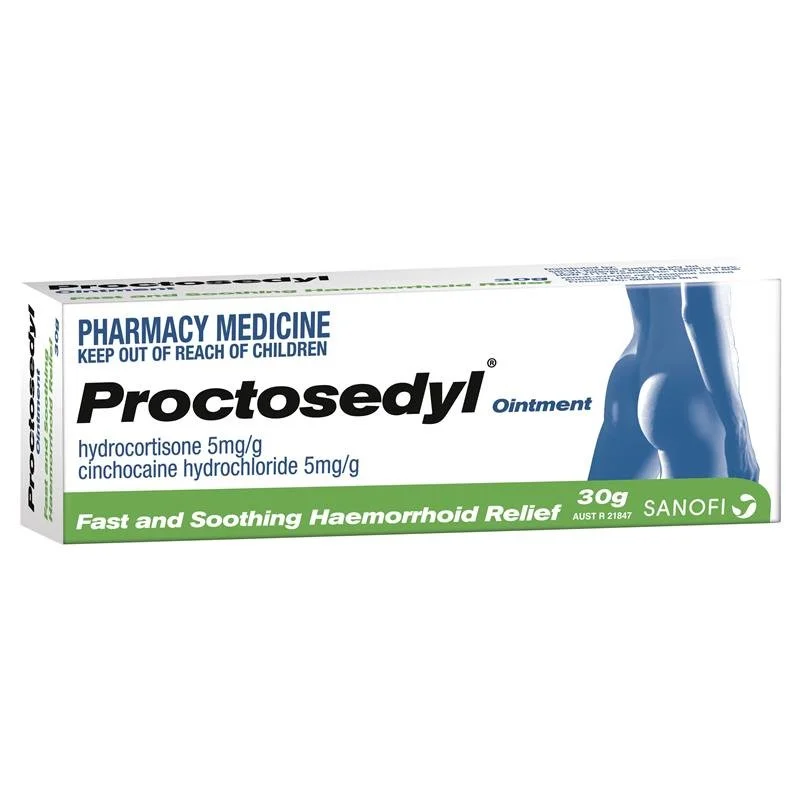
Proctosedyl ointment
NOTE: Haemorrhoids are the swelling of veins in and around the anus. This can cause discomfort and pain.
Bleeding can occur if the vein wall breaks (for example, when wiping with toilet paper) and this will be seen as fresh blood on toilet paper, the toilet bowl, in the stool/poo itself or on underwear.
-
Proctosedyl ointment contains two ingredients; an anti-inflammatory (hydrocortisone) which reduces the swelling and a pain reliever (cinchocaine).
-
Patients who have noticed blood on toilet paper, the toilet bowl, in their stool or on underwear.
NOTE: Refer the patient to your pharmacist, particularly if this is the first time the patient has noticed blood and is seeking advice and treatment.
Medicines to relieve the pain and discomfort of haemorrhoids
-
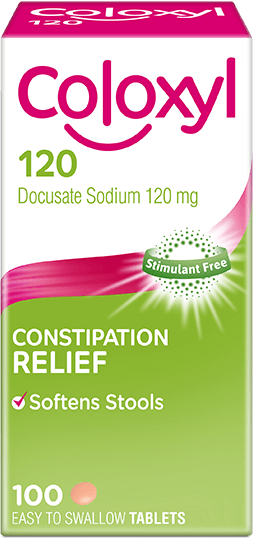
Coloxyl
Coloxyl Infant Drops
NOTE: Coloxyl contains Docusate which is a stool softener.
Coloxyl is available with just the ingredient Docusate, and in combination with the ingredient Senna (see Stimulant laxatives).Coloxyl Infant Drops contain Poloxamer which is a stool softener.
-
Stool softeners have a slow rate of action and will usually work within 1 to 3 days.
The dose will depend on the severity of symptoms, the age of the patient and the cause (if known) of the constipation.
See pack instructions for guidance.
TIP: Encourage your patient to increase their water intake to assist with softening the stool.
-
Patients who want gentle constipation relief.
Stool softeners may be used in patients with limited mobility, such as those in residential aged care facilities.
Babies and infants – refer to your pharmacist.
-
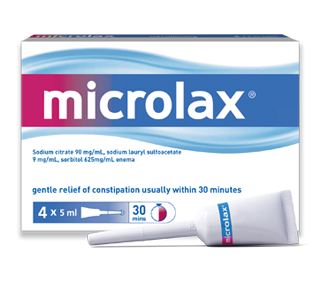
Microlax enema
Glycerol suppositories
Dulcolax suppositories
NOTE: As these products are fast acting it is advisable that the patient is in or near their toilet when they administer the dose.
-
Enemas and suppositories have a rapid rate of action and will usually work within 45 minutes, noting that the urge to empty the bowels can occur very quickly, within minutes.
It may be advisable to refer these patients to your pharmacist to ensure they fully understand the way to use the enema or suppository and to check that it is their best course of action.
-
Patients who have a high degree of discomfort and pain and need a rapid solution to relieve their constipation.
Medicines administered into the rectum – enemas and suppositories