

Chapter 1: Clinical Overview
What can help people Quit?
Nicotine is the main addictive substance in cigarettes. When a person smokes cigarettes, many parts of the body get used to having nicotine in them. When a person quits smoking, they also quit nicotine and will likely have withdrawal symptoms. This is because the body must get used to not having nicotine.
Nicotine Replacement Therapy (NRT) reduces the withdrawal cravings and other feelings. Plus, NRT does not contain all the harmful chemicals that cigarettes have in them.
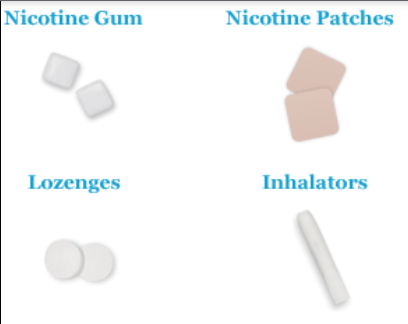
NRT is available in different forms, so your patient can find the product that best suits their needs and lifestyle, which helps them to use NRT most effectively (improves their compliance) which helps them to quit successfully. Many people use NRT in a combination of products, such as:
Patches, which provide nicotine slowly and steadily, combined with
Oral products - mouth spray, lozenges, gums or inhalers which are faster and shorter acting.
This gives them a steady level of nicotine (patches) all day and they can have a bit extra when needed, using the faster acting forms.


NRT useful tips
Nicotine patches come in 24 hour or 16 hour formulations, which are both equally as effective.
If your patient mentions that they have trouble sleeping while wearing the patches, it is ok to suggest they remove the patch at bedtime.
Nicotine gums look like regular gum, but must be used differently by what is called the “park and chew method”. This consists of three simple steps which you can explain to your patient:
Use the gum when you feel like smoking – the earlier in the craving cycle the better
Put the gum in the mouth and start chewing. When you feel a tingling sensation “park” the gum under the tongue or between your gum and cheek until the tingling stops, then start chewing again
Repeat – “park and chew” until the flavour has gone, usually about 30 minutes or the craving to smoke has reduced. Then throw the gum away.
Nicotine lozenges – use a “Park and suck method” like the gums when the peppery, bitter taste occurs.
Nicotine spray – prime the spray, hold it close and spray the inside of the cheek, avoiding the lips. Try not to swallow for a few seconds.
Nicotine inhalers – these help by providing nicotine to reduce the craving, while keeping the hands and fingers busy holding the inhaler, as though the smoker had a cigarette.
It is ok, but not recommended, if your patient has the occasional cigarette while using NRT. It may mean that they need more of stronger NRT products.
Some patients need more than NRT to help them overcome the other feelings and emotions of withdrawal. Suggest that they access Quitline which is a telephone counselling and advice service.